
Home >Pharmaceutical> L-Lysine hydrochloride
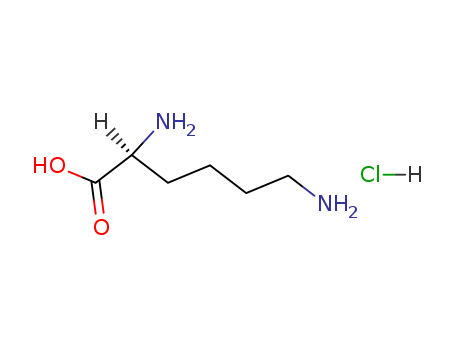
- Chemical Name:L-Lysine hydrochloride
- CAS No.:657-27-2
Manufacturer Sells Best Quality L-Lysine hydrochloride 657-27-2 with stock
- Molecular Formula:C6H15N2O2*Cl
- Molecular Weight:182.65
- Appearance/Colour:White crystalline powder
- Vapor Pressure:0.000123mmHg at 25°C
- Melting Point:263 °C (dec.)(lit.)
- Boiling Point:311.5oC at 760 mmHg
- Flash Point:142.2oC
- PSA:89.34000
- Density:1.28 g/cm3 (20℃)
- LogP:1.72990
L-Lysine hydrochloride(Cas 657-27-2) Usage
|
Synthesis |
L-Lysine hydrochloride can be synthesisied by microbial fermentation to give?crude L-Lysine , and then purified and synthesized by crystallization in hydrochloric acid. |
|
Biochem/physiol Actions |
L-lysine is an essential amino acid in animals and humans. L-Lysine is necessary for protein synthesis in the body and proper growth. L-lysine lowers the cholesterol level by producing carnitine. L-lysine aids in calcium, zinc and iron absorption. Athletes take L-lysine as a supplement for lean mass building and for proper muscle and bone health. L-lysine competes with arginine during viral replication and reduces herpes simplex virus infection. L-lysine supplementation reduces chronic anxiety in human. Lysine reduces viscosity of serum albumin solution for injections. |
|
Safety Profile |
iWdly toxic by ingestion. When heated to decomposition it emits very toxic fumes of HCl and NOx. |
|
Purification Methods |
Likely impurities are arginine, D-lysine, 2,6-diaminoheptanedioic acid and glutamic acid. Crystallise the monohydrochloride from water at pH 4-6 by adding 4 volumes of EtOH. At above 60% relative humidity it forms a dihydrate. [Birhbaum et al. J Biol Chem 194 455, 468 1952, Kearley & Ingersoll J Am Chem Soc 73 5783 1951, Beilstein 4 IV 2717.] |
|
Definition and Usage |
Lysine Hydrochloride (Lys) is an essential amino acid for humans and animals. It is utilized in various applications, including animal feeds, prevention of herpes simplex recurrence, and cereal fortification in some developing countries. |
|
Usage Quantity |
Around 45 tons of Lysine Hydrochloride is utilized in human dietary supplements annually, while approximately 225 thousand tons are used yearly in animal feed. |
|
Therapeutic Potential |
Research reports and case histories suggest potential therapeutic uses of Lysine supplements in cardiovascular diseases, stroke, osteoporosis, and stress-induced pathologies, in addition to prophylaxis of herpes simplex recurrence. |
|
Importance in Broiler Diets |
Lysine is often a limiting amino acid in standard formulations of broiler diets. |
|
Forms and Composition |
Lysine Hydrochloride (L-Lysine HCl): It contains a minimum of 78% lysine and is the dominant source of lysine added to poultry diets. |
|
Composition Details |
L-Lysine HCl: The dried, crystalline form contains about 78.5% free lysine. |
|
Definition |
ChEBI: The hydrochloride salt of L-lysine |
InChI:InChI=1/C6H14N2O2.ClH/c7-4-2-1-3-5(8)6(9)10;/h5H,1-4,7-8H2,(H,9,10);1H
657-27-2 Relevant articles
Chiral Receptors for Lysine Based on Covalently Linked Bis- and Tris-binaphthylphosphoric Acids
Octa-Smolin, Frescilia,Thiele, Maike,Yadav, Rohan,Platzek, André,Clever, Guido H.,Niemeyer, Jochen
supporting information, p. 6153 - 6156 (2018/10/05)
The synthesis and application of three c...
A Water-Soluble Cationic Zinc Lysine Precursor for Coating ZnO on Biomaterial Surfaces
Yuan, Shaotang,Nawrocki, Shiri,Stranick, Michael,Yang, Ying,Zheng, Chong,Masters, James G.,Pan, Long
supporting information, p. 10094 - 10097 (2016/10/26)
A novel water-soluble cationic zinc lysi...
Polyunsaturated fatty acid derivatives, pharmaceutical compositions containing the same, method for the preparation thereof, and their use as medicament
-
, (2008/06/13)
The compounds of the Formula (I) STR1 wh...
Isolation and Properties of Lysine-producing Mutants with Feedback-resistant Aspartokinase Derived from a Brevibacterium flavum Strain with Citrate Synthase- and Pyruvate Kinase-defects and Feedback-resistant Phosphoenolpyruvate Carboxylase
Shiio, Isamu,Yoshino, Hiroshi,Sugimoto, Shin-ichi
, p. 3275 - 3282 (2007/10/02)
Although the growth of Brevibacterium fl...
657-27-2 Process route
-
-
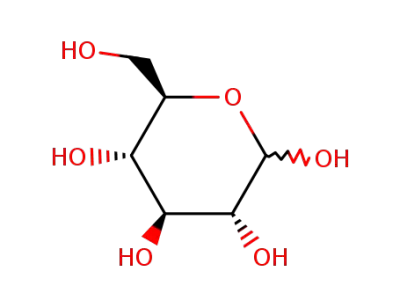
2280-44-6
D-Glucose

-
-
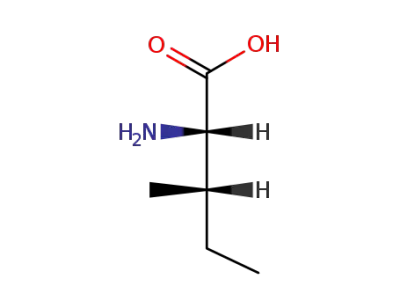
73-32-5,959215-79-3,18875-42-8
L-isoleucine

-
-
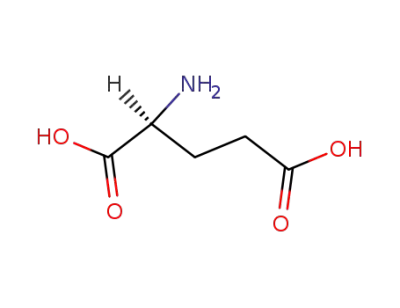
56-86-0,21675-62-7,23009-64-5,25104-13-6,84960-48-5,25513-46-6
L-glutamic acid
-
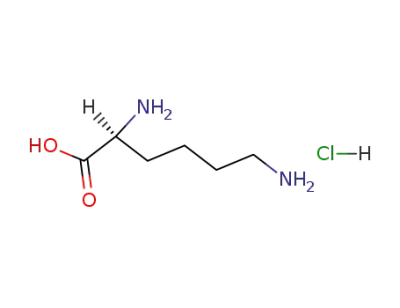
-
657-27-2,10098-89-2,26124-78-7
L-Lysine hydrochloride
-
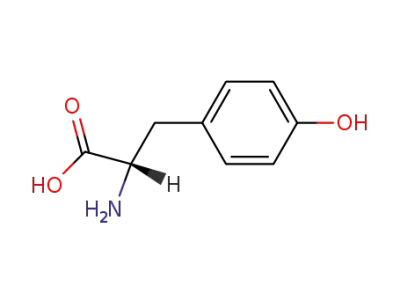
-
60-18-4,18875-48-4,25619-78-7,30704-25-7
L-tyrosine
| Conditions | Yield |
|---|---|
|
at 30 ℃;
for 72h;
Yield given. Further byproducts given. Yields of byproduct given;
Brevibacterium flavum, mutant strain AH-198, soybean-meal hydrolysate, (NH4)2SO4;
|
-
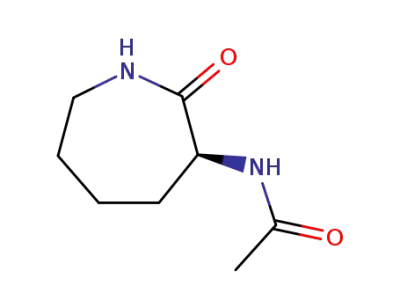
-
118477-18-2
N-acetyl-cyclolysine
-
-
657-27-2,10098-89-2,26124-78-7
L-Lysine hydrochloride
| Conditions | Yield |
|---|---|
|
With
hydrogenchloride;
for 5.5h;
Heating;
|
100% |
657-27-2 Upstream products
-
2280-44-6
D-Glucose
-
129243-87-4
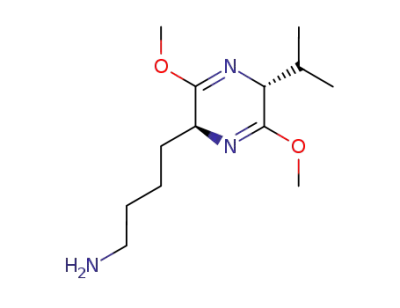
4-<(2R,5S)-2,5-Dihydro-2-isopropyl-3,6-dimethoxy-5-pyrazinyl>butylamine
-
118477-18-2
N-acetyl-cyclolysine
-
118477-05-7
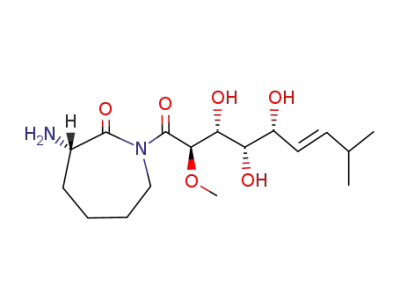
Isobengamide E
657-27-2 Downstream products
-
42294-61-1
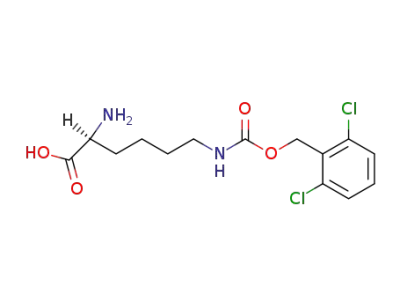
Nε-(2,6-Dichlorbenzyloxycarbonyl)-L-lysin
-
28422-18-6
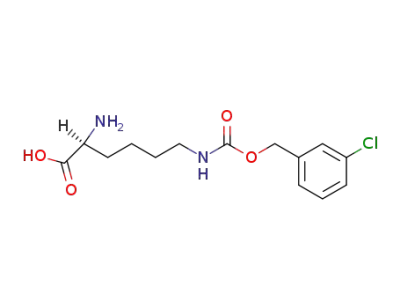
Nε-(3-Chlorbenzyloxycarbonyl)-L-lysin
-
42390-97-6
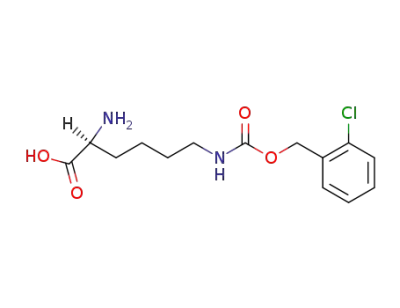
Nε-(2-Chlorophenylmethoxycarbonyl)-(S)-lysine
-
42294-62-2
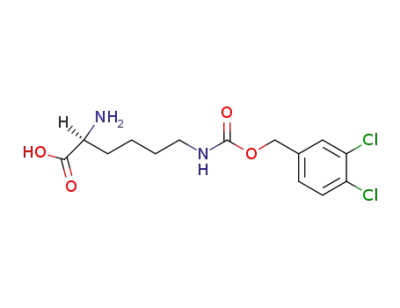
Nε-(3,4-Dichlorbenzyloxycarbonyl)-L-lysin